Things I Say to Children

Two cliche, not new assertions and three scenarios are the motivation for this post:

The assertions:

  1. Sometimes hindsight is 20/20.
  2. Most things are easier said than done.

The scenarios:

  1. I’m standing in the kitchen debating with a nine year old what’s worse: having ice cream for dinner or having no dinner at all.
  2. Later that week, I’m fighting with a six year old because his throat hurts and he is refusing to eat breakfast. This time, I’m standing in the kitchen refusing to send him to school without breakfast. He had to eat something!
  3. Most recently, I’m picking a fight with a nine year old about why a Chewy granola bar isn’t the best choice for breakfast. 

Here we go!

In the midst of these disputes I calmly and directly present common knowledge about nutrition and bodies in stylized child-friendly language as the foundation for my perspective. I say things like:

  1. Your body needs calories. So, if you’re choosing not to have dinner or to eat ice cream for dinner, pick ice cream. Calories are energy and after a hard day working and learning you need to refuel your body to get ready for the next day. I also share that some types of energy are more sustaining to your body. I explain that while ice cream has dairy it also has a lot of sugar. It could give you energy in the short run but make you hungry or needing more energy in a few hours. 
  2. Breakfast is the most important meal of the day. You can’t go to school without breakfast because your brain won’t be ready to learn. You need to eat a healthy breakfast to tell your brain and body it’s time to start the day. [I then go on to encourage some healthy breakfast options such as eggs, cereal, fruit, etc. Which, brings me to the granola bar argument…]
  3. Chewy granola bars are processed foods, I say. Your body can process foods all on its own, but it prefers whole and natural foods. You can tell if something you’re eating has natural ingredients by looking at its label. If there are words/foods you can’t recognize on the label it’s likely your body can’t recognize them either, and it’s going to be difficult for you to digest. Which means, your body cannot get the nutrition as quickly or completely.  [And then, we’re back to them importance of eating breakfast…]

I say these things and I believe them wholeheartedly – just apparently they don’t apply to me! My perception of my body and what my body needs is so distorted right now. I know my brain and body need nutrients and energy. I realize some foods are easier to digest than others, and protein gives you more sustained energy than sugar. I contend 100% that breakfast is important. Yet, I’m struggling to eat at least 700 calories a day, and it’s shockingly, incredibly easy for me to justify and rationalize this! These morning spats have become my daily reality check – my conscience is screaming “listen! just listen and take notes.” I’m standing there insisting they eat a healthy, hearty breakfast yet I finished my second run of the day at 10 PM the night before (only 9 hours after my first run) and didn’t eat anything before I got to their house. I’m firmly convinced that coffee is food, and it’s the only type of energy I need.

Sill, I firmly persist on my pursuit of serving a nutritional breakfast each day.

I know I should take my own advice!

Here’s the thing, the brain is wickedly deceptive. Most days, I truly think I’m absolutely fine. There are even moments (ex. when I’m researching or running) where I feel absolutely unstoppable – invincible even. I feel purposeful, diligent, excited – I feel alive! In those fleeting moments, I can’t believe the other frenetic days/feelings were real. I can’t believe I felt/was/am that out of control. And in hindsight, I realize those are the moments I’m MOST out of control. I’d like to be able to discern between real control and what’s so terrifyingly out of control it feels good – maybe even calm.

I realized how hard it is for me to practice what I preach, when I acknowledged how crippling it feels to do things that are “good for my body”*. Hence, most things are easier said than done.


*this is meant in the most literal sense. I’m not food shaming, dispelling bouts of “fitspo”, or claiming to understand nutritional science. Also, all bodies and all bodies’ needs are different.

Writing about Writing

Writing about writing involves thinking about writing, or even better, thinking about thinking about writing! (Yay! Meta-level thinking!) If I stay here too long it can feel really out of control really fast. But, in short bursts the feelings of ambiguity and possibility are bearable to entertain.

Anyway, I haven’t posted recently because I’ve been over on ravishly.com living the dream as a contributing writer! Here’s my contributor page: YAY!!!! Similarly, I’ve been over on themighty.com (here) writing about chronic pain.

Writing has been the most amazing outlet for me! It’s helped me find space, give voice to my words, and speak my truth – that’s super powerful. When I’ve felt most “stuck”, both with things I’m dealing with and how to write about them, I’ve read the piece aloud and recorded myself with the inflection, tone, and emotion I heard in my head, and would have used in a conversation with a good friend. After listening to the recording and following along with my words I was able to overcome the “stuckness” and finish the piece. Writing is a welcomed, reliable, trustworthy companion these days. When I’m writing I notice nothing else. I retreat to a state of flow. I feel at peace. Maybe even happy? It’s allowed me to think fully in a way I have truly missed.

I didn’t even recognize this feeling – this change – until I stopped and acknowledge how refreshing and unfamiliar it feels to think coherently again! My friends said, “I feel like you’re back”. I nodded confidently. Slowly but surely, I’m finding parts of myself that disappeared months ago.

My words are stamping the world with imprints that are illustrative of the messiness of life. Through my work, I’m declaring “dealt with” (mostly) the things I’ve kept to myself or ignored for WAY too long. It’s liberating! The experience of spewing my thoughts, taking a break, and revisiting and reorganizing what I’m trying to say has helped me feel calmer, express myself, and gain a sense of connection I didn’t realize I’d find with myself and people across the world – literally.

I wrote this a few weeks ago and it still resonates with me: The last six months of my life have been the most challenging I’ve experienced in a while. I graduated and left a school where I was thriving. I spent nearly every day for four years feeling on top of the world. It was amazing. I felt unstoppable. I left for a glamorous name and what I expected would be the next best step for my personal and professional development. After months of struggling silently I found respite and strength in writing. Rather than just reading (daily) the articles on sites that share my values and teach me so much, I jumped into my own uncharted space and started to connect with myself and others. It’s been hugely influential to my personal growth and exploration. Earlier I wrote, “from fury comes insight.” That’s how I feel when I tame the chaos I’m experiencing by writing. This feminist writing space has shown me that people “get” that not every day can be a good day and I can tell others understand that academia can be a difficult and special space to reside especially in the face of other challenges and experiences.

The type of connection, belonging, validation, and excitement I’ve felt from my friends online is inexplicable. This journey has introduced me to some incredible, down-to-earth, empathetic people who are practically the hidden treasures of internet (they’re also just people but I’m glorifying them here because they’ve made a difference to me. Internet fame is real!).

When I’m writing, I can be myself and share my thoughts. It actually feels really vulnerable, exposed, and terrifying! Sometimes I get “stage-fright” and want to swallow my words back up or not claim them as my own. In those moments, I take the the Shonda Rhimes “yes” approach – even though it scares me. I have to own this!

Recently, I shared that I traded social media connections for authentic, personal connections. In this context, I valued in person conversations, and quality over quantity. I still value quality relationships but my parameters have expanded. Connecting with people online showed me that these connections can also be authentic, valuable, personal connections. I’ve found more people who “get it” and been more open about my experiences than I ever anticipated. I’m loving cultivating meaningful relationships as a I grow as a writer, academic, and activist.

I have discovered the world of shared experiences and stories. I feel closer and more whole than I expected or thought was possible. There’s a world out there where people absolutely get it and care. I realized that even though I feel lonely,  I am not alone. That was necessary.


If you’re experiencing writer’s block (or loneliness), keep writing! As much as you can, keep exploring, connecting, wondering, asking, and thinking! It’s an adventure, and in the end, it could turn out to be like nothing you ever anticipated – it might even be better!


Why is Talking Politics Taboo?

HELP! I’m a Millennial and I don’t know who to vote for!

This election season has been loud. Honestly, it’s reminiscent of a bad run of a sloppy reality TV show. It’s underhanded, strategic, and trashy. Oh wait, that’s politics.

Full stop.

But, I’m not done. Here’s the thing: everyone keeps telling me voting is a privilege, an obligation, an expectation, but nobody is telling me how to decide. Obviously, nobody can tell me who to vote for or what campaign items I should pay attention to. Clearly, this is how democracy works. Understandably, I’m the only one who knows what I value and how I feel about each candidate’s platform. I GET IT! But, there’s a part of me that’s itching to talk this out with someone. How can I do that if talking about politics is so taboo?!?!

I’ve heard, “honestly I’m just not confident in any of the candidates.” I’ve contemplated the hypotheses about how to vote savvy and make sure some other candidate doesn’t get the nomination – lesser of the evils I guess. What I haven’t heard is anyone advocate for a candidate as opposed to against the next best alternative. I’ve even heard “this election is a joke” and “I’m moving to Canada.”

Politics is cutthroat. It’s accompanied by an overwhelming, seemingly necessary silence and cloud of fog that makes the real issues and agenda items so difficult to grasp. Some people call for more transparency from the politicians. I’m here to call for more conversations that are grounded in a desire to learn and listen rather than argue and advocate; especially, if they’re difficult to have. [Side note: this relates to more than just politics. Read between the lines!]

This is my second time voting in a presidential election. The first time, the choice was easy. I was so caught up in the excitement of voting I’m not sure I took the responsibility seriously enough. Now, I’m fully engulfed in the Millennial identity – the good, the bad, and the ugly – and I’m swimming in the narratives that remind me that my generation is “the future”. Suddenly this responsibility feels ominous and heavy. This is especially burdensome when I can’t get my hands on a single piece of unbiased media. I’m more confused than ever. I’m less confident in my preferences (candidates aside). I’m increasingly convinced my vote won’t even make a difference.  The game of politics is a triumphant, slightly elegant fanfare of trial and error disguised as strategic decision making. How can I decipher the chaos and “show” of it all and make an informed choice? 

This is important. It’s literally the future. Politics is messy. It’s uncomfortable – think #boundaries. It’s clever and a bit deceptive. But, it’s actually relevant to our lives. So, let’s talk.

Coffee. Because Grown Ups Can’t Carry Security Blankies

Any Peanuts Fans? Try this simile: 9780694010448my coffee cup is like Linus’ security blanket.

Really though, how weird would it be if grown ups carried around security blankets? Luckily, there’s a solution:

COFFEE!

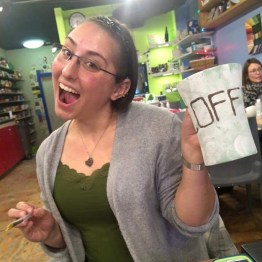
Surprisingly, this isn’t a post about the necessity or joys of excess caffeine consumption in graduate school – that’s been done (and overdone). However, I strongly contend that coffee is necessary to survive graduate school. I don’t fully trust people who don’t drink coffee. To that note, you won’t often find me without a cup of coffee in my hand. That’s a tendency my thesis advisor eagerly brought to my attention YEARS ago.

Here’s another simile: 5b324d3f5f4747035ddbb790cacbe5d4me holding a cup of coffee is like a teen holding their cell phone.  It’s like they can’t live without it. They’ll panic if it’s not within arm’s length. I definitely feel that way about coffee. My coffee cup is practically an appendage.

More than once, I’ve said that if I could have an IV of coffee I’d be set for life or something as illogical as “I wish I could replace my bloodstream with coffee.” Although, even with a constant stream of coffee flowing in my body at all times, I still might hold on to cup – my trustworthy mug.

When I’m holding a coffee there’s a reciprocal, warm embrace between me and my lifeline that aligns perfectly with the curved grasp of my palm. It’s always been there for me and it doesn’t judge. It’s the last thing I think about before I go to bed and the first thing I attend to when I wake up – NO I’m not addicted (*looks away*). It’s silly. Really.

I know.

IMG_20151219_190658
Typical.

But, there’s comfort in coffee. It’s reliable. It makes awkward handshake dances easier to avoid. It makes not knowing what to say practically a nonissue (*takes sip*). Similarly, sipping on coffee combats the tediousness of long commutes or college lectures. Coffee dates are the saving grace for uncomfortable interactions with mere acquaintances or exciting reunions with good friends.

So yes, coffee is my socially approved, grown up, sophisticated security blanket, and I think that’s perfectly okay!

“I Used to Wear Clothes That Were Too Big For Me Too”

“I used to wear clothes that were too big for me too” – someone said that to me this week! They also said, “Your pants are too big” and “you’re so skinny; are you losing weight?”

My responses: “Okay”, “I know”, “Depends on the day” respectively. I wanted to scream “WHY ARE YOU FIXATING ON MY BODY?!?!”

Writers find their inspiration from anything; it could be a conversation, an observation, a “thing”, a book. You name it! So, I heard those words and instead of calling out their fixation with my body, DAYS later I’m still fixating on them. Since I’ve lost weight, people aren’t as impressed with ME. They’re impressed by my body. They ask me how I did it. They compliment my looks rather than my accomplishments and my incredibly determined, quality-driven work ethic.

Until now, the only time I can remember people commenting on my body was to tell me to I was too big. As a teen, I was a 4’11”, size 16 gymnast. I was also a person living with a chronic physical illness – go figure! So, needless to say, my relationship with body was anything but “typical”. Thanks to BMI, I had doctors telling me, at 16 years old and 182 pounds, that I was morbidly obese. I hated shopping (still do). Buying clothes felt like being pushed on the ground every time I finally stood up – nothing ever fit (still true). I didn’t even want to go to prom because I couldn’t stand the thought of having to find a dress!

My mom thought if I found a dress I felt confident and beautiful in that I’d change my mind (she thought I’d find that same confidence and beauty after my second breast reduction too). She routinely told me, “You’re beautiful no matter what.” Her words, although I knew they were sincere, felt empty. What I recall of those experiences are shopping trips that felt interminable. I tried on dress after dress (or every colorful, lace bra in the “regular” stores I could finally fit into) with increasing disappointment. There were so many tears.

So far, I’ve hated my body at every size – and not just because of my size.

Now, I’m trying to practice body positivity – which is something I support and encourage for everyone. For me, it’s really difficult to embody that line of thinking. I’m working on body neutrality instead which Melissa Fabello describes as “the acceptance of our bodies as-are, for the understanding that we are already enough”. When you call me “skinny” what I’m really hearing you say  is “I’m more interested with how you look than who you are” or even “I’m grounding my perceptions of your worth in your looks”. Those comments – what you think are compliments- don’t make me feel any happier or proud of myself than the relentless notions of necessary change I was pressured to pursue as a teen made me feel disappointed or imperfect. I hate when people call me “skinny”!

Regardless of my turbulent relationship with my body, one thing has remained constant: I am an athlete. I started drastically losing weight when I began searching for sanity in exercise. I felt lost. I felt out of control. The adjectives I used to describe myself – evidence of my perceptions of my self-worth – felt so far away. My focus, motivation, support, was gone. Running saved me – it still does- from hitting absolute rock bottom (I’ve been close!). Eliana Osborn shares “[she] felt purposeful and strong… While [she’d] been running, [she’d] been alive. Not [her] best self, but [herself]. Without it, [she] struggled to exist.” I can so relate! When I’m running, I feel unstoppable. I feel invincible. I’m inspired to explore how fierce my body can be. For minutes, moments, the world stops spinning and there’s clarity. I feel so in charge. It’s a feeling I’ve missed. It’s like I’m winning the never ending race to find myself. The faster and harder I push myself, the closer I get to the finish line. I’m picking up clues along the way. I know I’ll get back there soon. And so, I feel like I need to keep up my athleticism – so I can find control. Which means, I may lose more weight.

Being an athlete is my hidden weapon. It’s what I pull out in moments of self-doubt to prove to myself (and others) that I can do it – that I’m good enough! It’s not about being “skinny” or looking “fit”. My body is amazingly resilient and strong. It’s also been fat, skinny, deprived of nutrition, greedy, exhausted, caffeinated, and a whole host of other things.

When you call me “skinny” you’re indelicately weaving together my ideas about my strength and resilience and your pervasive, hierarchical, and restricting beliefs about “what is “normal,” “real,” or “correct.”  Please stop!

What is Control?

I’m writing tonight because something great is happening here – people “get it”. Right now, that’s so necessary and meaningful. I’m inspired. Thank you!


I don’t cry. That was one of the first conversations I had with my new friend Sam. Today, Sam’s piece made me cry TWICE!  This piece got to me. BIG TIME.

twitter picWhere to start? Where to start? This is hard.

Okay, “What is control?”

When I Googled “control” I found about 3,020,000,000 results in 0.67 seconds. Control means to have power over something. It is when you restrain or direct influence over something/someone; regulate. It implies regulating to keep order (merriam-webster.com).

To me, control is ANYTHING that can make the chaos feel like it’s my fault. Control is what I can call on to mitigate the feeling that I can’t keep up with the chaos anymore. Control is making myself miserable because then at least I’d be responsible. I’d be in charge. Control is cultivating order at all costs. It’s doing whatever it takes to rescue the person I used to recognize as unstoppable. It’s the opposite of spinning – as in spiraling out of control.

Too often these days, there’s no clarity. It’s like everything is in a fog and I’m just barely present ever. It’s so loud and fast in my head most of the time I’m not even able to hear or focus in conversations or meetings – like I can’t listen. I can’t think! The truth is, I’m overwhelmed all the time (and angry too!). This type of persistent whirlwind is distracting and dangerous. It’s frightening and lonely. It’s my reality. I think the feeling that I can’t make it stop even if I wanted to and the fact that I’m getting used to it rather than trying to change it is what’s freaking me out.

Sam NAILED IT when he said, “I start to hate myself a little when I think about how restricting [and other forms of self-harm] like this can feel good – can feel really, really good – because it gives me this illusion that my feet are on the ground.” That’s what it is. It’s an illusion. It’s another attempt to keep up appearances and be “fine”. If I feel like I’m in control and I’m choosing it, then, to me, that makes it okay.

I’m no longer in control. That’s not okay. I’ve moved from portioning meals (let’s be real. apples, trail mix, and hard boiled eggs are snacks) so that I have enough to eat, to portioning food so I won’t over indulge. I need to control EVERYTHING that my body endures. Most days, my ENTIRE caloric intake for the day equates to less than a single meal or has, imperatively, been dissipated by an intensive cardio workout – a workout which eases my mind, boosts my mood, and puts ME back in control . That’s not control. For now, I’ll call it organized chaos.

The appearance of control is deceptive. It makes me SO feel good. It’s when I experience the kind of fast, logical, coherent, intentional thinking I crave – the mentality I miss. The good days mess with me! They make me think “it isn’t really that bad”.  I can justify this; I can make it rational. If it’s rational, it’s alright. If the fury can be tamed it’s fine. I’m fine.

I’m fine. I’m fine.

DAMN!

Have I convinced anyone besides myself?

I Didn’t Expect to Learn Something Today

I just saw an incident that screamed “Racism is real!”, and  I have to write about it!

I spent the weekend in New York City consuming feminist laced theater and feeling all the feels. Both my heart and mind were reminded how it feels to be moved so authentically it hurts. I laughed, cried, and shook from happiness. Good theater can do that.

Anyway, on my last Uber ride of the weekend, I witnessed something influential:

A white man is walking in the crowded street. He’s not paying attention. Our driver, an African male, stops short – inches from hitting him. The man slams his fist on the hood of the car and starts to scream “Hit me! Hit me!” Our driver rolls down the window and, from the white man, racists obscenities ensue – “You dirty African. Go back where you came from!” Our driver, becoming more enraged, suppresses his desire to fight and angrily drives away. People stand around watching. They’re pretending to mind their business.

I was sitting in front seat on the passenger side of the car. Basically, they were fighting over me. Honestly, I was scared and mad and shocked. I’ve seen racism. I’ve read of racism. I concur white privilege and institutionalized racism is real and rampant. I was (of course) appalled.

What happened next made this experience more than just infuriating but meaningful.

Our driver was furious (his words) and he said if it were only him he would have gone out and fought him.  Not because he wanted to fight, but so that the man wouldn’t get away with it. He explained that because he didn’t react he was sure that man would do it again to someone else – he wanted to teach him he was wrong. He said that by not reacting he set an example for everyone who was watching. He felt like sent the message that that it was okay.

I wondered, “What would I do in this situation?”, “How would I react?” It quickly occurred to me that I will, likely, never have to endure something like this. That’s how you know your privilege is real.

When I was a kid, I learned to ignore bullies. If they don’t get a rise out of you, they’ll stop. Today I learned a more important lesson. Advocacy doesn’t have to be colorful or 792b76f20ce471b07541248d35ac45b5grandiose.  And, it doesn’t have to occur just on one day or because the circumstances dictate “today is a day of service”. Small actions add up and can make a big difference. We will all experience moments the infuriate us – it’s how we respond and our intentionality that could influence others. I am confident there’s a lot we can do to teach each other, to impact each other.

This isn’t my story – not really. But, as a bystander I have a chance to make this right. Advocacy is everyone’s job. What I saw today was something I wish I could call unbelievable. Unfortunately, that’s not the case.  Our world – cluttered with systematic racism (all the other -isms too!)- is disappointing and dreadful. The prospect of change feels hopeless. Nobody knows how to fix it.

I know this though, sometimes we’ll learn our most important lessons from a (not so) typical Uber ride in New York City.

Effortlessly Perfect

I think, you become an adult the moment you realize that most of the time NOBODY knows what they’re doing. Practically no one is an expert in anything except for pretending to be an expert at something and making it seem like they’ve got it all together. Keeping up appearances and “faking it” could be a full-time job. I guess there’s a turning point, it’s a paradox really, where once you realize how much you know (about your field, life, “the real world”) you realize how much you actually don’t know. The objective then becomes, “how can I convince as many people as possible I belong here and I’m as knowledgeable as they expect me to be?”

When that objective impedes the functioning of your life and begins to dictate your decisions that’s called Impostor Syndrome. It’s defined as a collection of feelings of inadequacy that persist even in face of information that indicates that the opposite is true. It is experienced internally as chronic self-doubt, and feelings of intellectual fraudulence (Caltech Counseling Center, 2015).

Impostor Syndrome is common among, although not exclusive to, academics and high achieving women. It’s been discussed in academic literature since 1978 when Clance and Imes coined the “The Imposter Phenomenon in High Achieving Women”. They explain that “Despite outstanding academic and professional accomplishments, women who experience the imposter phenomenon persists in believing that they are really not bright and have fooled anyone who thinks otherwise. Numerous achievements, which one might expect to provide ample object evidence of superior intellectual functioning, do not appear to affect the impostor belief. ” Alrighty, enough literature…

Impostor Syndrome is real and by reducing it to “humility” and ignoring its consequences we’re perpetuating the silence around mental health and the pressure and culture of perfectionism.

For me, Impostor Syndrome started invading my thoughts when I decided to apply to Brown. Then more persistently, when I struggled through my personal statement for my graduate school applications. And, most viciously when I got accepted to Brown and decided to come. In many regards, I’m “over it”. I know, and I’m confident that, I’m “intellectual enough” to be in graduate school but still, sometimes, it creeps up on me unexpectedly.  On a bad day, if I let it win, Impostor Syndrome prescribes me to stay in bed. It convinces me I shouldn’t even try because I’m simply not good enough. In my work Impostor Syndrome sounds like me telling myself “I can’t believe they’re letting/trusting me to do this task” – regardless of the rigor or importance. Then I spend hours scrutinizing over the smallest details to be sure to impress or meet their “delusional” expectations.

Lately I’ve been thinking a lot about Impostor Syndrome as it relates to social media and the necessity to present as perfect and simultaneously have every accomplishment appear effortless. I’m sure many of us can relate to abruptly halting our lived experiences to snap the perfect photo (and another and another) and then later stressing about crafting the pithy caption to capture the moment that was already ruined once we decided to take a photo. Right? The anxiety social media perpetuates in terms of what/how/why we share about our successes and good news (and how we perceive others will respond) makes this compelling to explore.

Why is it that when someone posts about their successes on social media it’s always accompanied by a slight, yet extremely important, attribution to luck or “the amazing opportunity”? Yes, humility is important and often we aren’t doing it all on our own but, can you recall the last time you shared an accomplishment without being concerned someone would think you’re being conceited or think you’re only sharing it to boost your self-esteem and receive their praise? Why should you be nervous to call a friend or post online and share something exciting?

There’s this pervasive notion that you can’t actually be proud of what you’ve done.102615bucks-carl-sketch-master675 You have to be #blessed or #lucky to parade positivity online (listen to #blessed – Stuff Mom Never Told You for more on this – it’s spot on) because calling attention to your successes outright is, apparently, social media taboo. WHY? Why do women feel the need to downplay their success or appear effortlessly perfect?

There’s even an app now that helps women stop saying “just” and “sorry” in emails so they stop “inadvertently discredit[ing] their own opinions”. It’s troubling though because nobody is talking about the societal and institutional parameters that perpetuate these minimizing behaviors and render them acceptable. Why do women feel more comfortable making themselves small? In some ways, I think, it’s an attempt to build themselves up. We’re not talking about the protective features those asides provide to make women feel like it’s okay to share about their exciting news or even simply their opinion. These small, but important, choices we make assure we’re not experienced as “bossy” or “boasting”. We do it even when we know we’re right!

The New York Times, discusses this culture of appearing perfect and saving face well in one of their most popular articles from 2015: Suicide on Campus and the Pressure of Perfection. They detail a phenomenon where students talked about how “They could say what they’d accomplished, but they couldn’t necessarily say who they were”. Such mind games! But it’s true and, it’s practically unbelievable that intelligent people can stare at their resumes and acceptance letters to Ivy League institutions (which if you “look beneath the façade of seamless well-adjustment…what you often find are toxic levels of fear, anxiety, and depression, of emptiness and aimlessness and isolation”) and see right past all the evidence that indicates they are deserving. They can easily convince themselves otherwise and may not even recognize themselves beyond the list of “things they’ve done”. Suddenly, their accomplishments stand in as the default measure that indicates who they are, their worth, and beyond the impressive list they’ve compiled they feel lost and misguided. It happens without consent and it’s positively crippling once it captures your mind.

The NY Times article also explains that “female students felt pressure to be “effortlessly perfect”: smart, accomplished, fit, beautiful and popular, all without visible effort.” These internal narratives are consistently challenged by loved ones’ encouragements, “you belong with those people”and “you’re meant to do this”. Where the words, “those people” throb like a pounding headache because they feels so separate, so elite, so much more than they could achieve; they  hear “you’re meant to do this” as “you tricked them yet again” rather than the support these phrases are intended to provide. So their foundation must be rebuilt often due to the wrath – expressions of support and encouragement – of what seems like never ending wrecking balls whose only obligation is to create cracks in their concrete with their terms of endearment. They go through the motions working themselves into fits of sleeplessness and mind boggling anxiety trying to prove they can do this – it becomes their sole obligation. At the same time, they’re consumed by maintaining an online presence of apparent effortlessness and success – but not too successful of course.

Don’t be fooled. Underneath the encouragement from friends and family and the pristine social media presence, their mind is unraveling. It tells a story which is comprised of lists of achievementsour-deepest-fear that amount to nothing special – cloaked in phrases like “it’s mediocre” or “just a thing I’ve done” – even when they’re spectacular! The list is glistening with expectations still to be met. We call these unmet items potential and as their list of accomplishments grows longer so too does the list of expectations. Somehow, as they become  more “qualified”, and subsequently feel less qualified, little by little the consideration of the associated hard work they’ve done to reach these numerous accolades dissipates. At some point, perfection becomes a burdensome, heavy expectation that weighs them down and occupies their mind. Soon, the means by with they achieve are less important and to the outside world it looks like they can do it all – and so they do and then some – whatever the cost. The conceptions that they work hard and overcome challenges or adversity are not entertained.  The final product becomes the only objective – nobody is concerned about the process or the progress. It’s a dangerous, slippery slope that ends in fear and pent up, insidious, persistent feelings of inadequacy which are kept separate from the persona they put on each day to face the world. It feels like they must make it seem absolutely effortless because otherwise, they’d have to actually recognize THEMSELVES rather than their resume. They end up feeling defeated simultaneously wondering how they can maintain the facade and how it was created in the first place. They experience all this utter nonsense, instead of owning their successes and being proud. Social media only makes it worse. It’s never ending and mostly they want it to stop – even if just for a moment – so they can gain some perspective.
15 Good Things From 2015

Everyone’s positive energy building up to the New Year is absolutely contagious. I want to join!

Here’s my list of 15 good things from 2015:

*not in chronological order or order of importance*

  1. I was awarded a Chapter Distinguished Service Key (DSK) in Alpha Phi Omega (APO): Upon receiving this fraternity honor I wrote “I feel like this statDSCN4702us should go something like “It was the best of times, it was the worst of times…” or “nobody said it was easy…” but actually, in all seriousness, it was truly an honor to be awarded a Chapter DSK today. I am so thankful for the wonderful experiences I’ve had as an active Brother and I cannot wait to continue to serve with APO as alumni!” Just a few weeks later I was offered a position on Region 1 Staff! This fraternity has given me more than I could ever ask for. APO continually shows me the the meaning of brotherhood in ways I can’t explain. I made some of the best friends and learned some of the most important lessons and skills of my life.
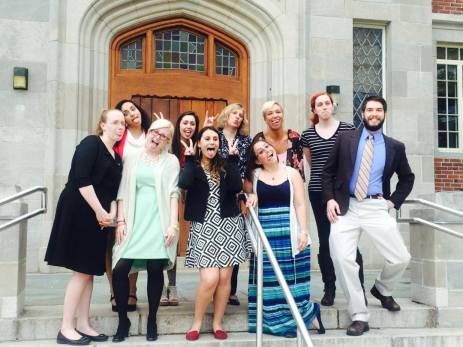
  2. I went on Birthright and spent my 23rd birthday in Israel!
  3. I finished my honors thesis: but really 53 pages later! This seemed like an impossible task made manageable only by consuming inappropriate amounts of coffee and working ALL THE TIME. I still don’t know how I did it all. Before this project, conducting my own research seemed like a task that was beyond the scope of what I expected I could accomplish as an undergraduate; my advisors’ commitment to me and my project convinced me otherwise and showed me that I can accomplish more than I expect. Having an advisor who saw enough value in my ideas and capabilities to believe in my project was imperative to the success of this work and was necessary for me to grow both academically and personally. My confidence and pride was ignited because she didn’t tell me no. Rather, she pushed me each day to excel. This project not only taught me the research process but was instrumental in creating a foundation for both my future professional and academic interests. Now, I want to be a researcher! Of course, none of this would have been possible or as fun without my amazing HDFS honors cohort. We were a great bunch and I loved every minute of our learning and lamenting together.11149684_10204024050981885_3863601930795783864_o
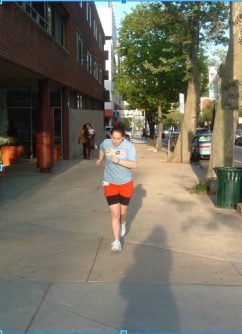
  4. I became a runner: I used to have a witty excuse as to why I hated running. I’d say, “it’s physics. It’s just logic. If you start where you end then you’ve displaced nothing. So, why would I run if displacement says at the end I’ll have accomplished nothing?” I clearly didn’t really understand running or physics then. I still don’t understand physics. Now, whether I’m running to escape or running to gear up to something, running is important for me. It gives me time to think. It gives me order, control, discipline, expectations, freedom, and strength. Some days, the best we can do is put one front in front of the other and face the day. That’s what running has taught me. There are no unconquerable obstacles, just different paces with which we overcome them. On June 4th I posted this photo [yes on Facebook] and pulled the caption from the first time I publicly shared this picture during my senior year of high school public speaking class last lecture. I wrote, “In the face of a challenge, face it. You never know what you can do until you try”.Then there were sentiments of continuing to persevere until you 11351330_10204410118993344_5105233088170803531_nreach your goals and never stopping until you achieve what you want. Apparently my 18 year old self was more attuned to grasping at opportunity than I realized and, I may never learn to stop!

    What’s even more important (and timely/relevant) about this picture is this: it’s the first time I ran and triumphed over RSD (circa 2007).  And now, I consistently surprise myself by running farther, faster, and longer than I have in my entire life. Not pain free but, still confident and owning it! In 2015, I tracked 426 miles and ran a 10K (6.2 miles) in 1:04:47.

  5. I was published on The Mighty! You can read my piece: The One Statement I Want to Hear From Loved Ones About My Invisible Illness here. [Side note: I have a forthcoming  piece on Ravishly – I’m really excited!]
  6. I started this blog! When I started this project I said, “I’m starting this project to make space to wonder…I’m also using this blog to find a space to reflect. That’s a word that wasn’t in my vocabulary a year ago but, many great mentors and conversations later, I’m craving that necessary “me space”. However, not even my best mentors or friends would willingly sign on to interact with my every thought, question, challenge, insight, funny link, or freak out moment. So instead, there’s blogging. ” I’ve grown to love exploring and thinking on things. Sharing my work has been exhilarating and making connections through my writing [and my online community] has shown me that even when I’m feeling lonely there’s someone out there who “gets it”. My list of “things to write about” is growing longer and longer each day. These days, you won’t find me without a notebook in hand in case something sparks an idea. It’s been a risk, it’s still a risk but, I’m really loving this project.
  7. I learned about the importance of relationships and gained some amazing friendships: And of course the only appropriate comment here would be from Grey’s, “We’re friends, real friends. And that means, no matter how long it takes, when you finally decide to look back, I’ll still be here.” – Grey’s Anatomy
  8. I practiced saying what I need, asking for help, and being a better communicator: I started with being okay with things not being “okay” or “fine”. I found an outlet through writing and some great, trustworthy friends to express myself more honestly without worrying about being a burden or being a toxic friend.
  9. I graduated from UConn!  It’s true, some of the best learning happens outside the classroom. At UConn I was challenged, pushed, mentored and questioned both inside and outside of class. Rather than feeling inadequate or frustrated I was inspired and thankful for all that I learned and all the ways I grew. At UConn, I truly thrived! I felt supported and confident. I did it all and then some and, I had an amazing network of friends, mentors, advisors, and professors encouraging me along the way. This quote rings true for me and is so applicable right now, “I’ve learned that home isn’t a place, it’s a feeling.”― Cecelia Ahern.  I miss UConn *literally* every day and I am SO proud to be a  Husky!
  10. Logically what comes next, I started at Brown University in the Urba10360465_10204185744024110_6042675827618780031_nn Education Policy Program: While this hasn’t been the BEST thing in 2015, one thing is certain, (in a paradoxical way) I know that if I never came here and if I stayed at UConn I wouldn’t ever know that I truly didn’t like it. I mean, beyond speculation. Also, and I guess obviously, the things I don’t like aren’t the things I was most nervous about so I suppose there’s value in that too. Regardless, I’ve had some amazing opportunities here to continue to grow as a researcher and an academic (whatever that means). I also learned the value of networking and connections beyond the colloquial saying “it’s not what you know, it’s who you know”. I’m working hard and making it work day by day.
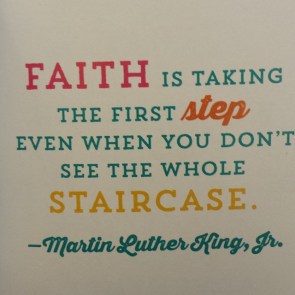
  11. I fell in love with stories and great conversations: I traded social media connections for authentic, personal connections and I couldn’t be happier with that choice. I’ve been listening a lot and also searching for those stimulating conversations that ignite wonder and create more opportunities to learn. The kind that leave you thinking and questioning long after the formal discourse has ended. I craved thinking critically and conscientiously. I’ve learned that when you’re open to allowing a conversation to change your perspective and you’re a partner in creating the space for meaningful, intentional interactions you’re facilitating change. Hence, this year, I adopted the use of the phrase “thought partner” in every, even sort of, appropriate context.
  12. MUSIC: Just music. But really, from country concerts and Broadway musicals, to the sounds and spirits of Kabbalat Shabbat I was reminded of and gained a new appreciation for the ways in which music connects us and fills a room (or a person) with such unique energy. Music fills the quiet space that so often feel lonely. A quote from one of my favorite movies August Rush seems appropriate here, “You know what music is? God’s little reminder that there’s something else besides us in this universe, a harmonic connection between all living beings, every where, even the stars.” SO TRUE! And of course, Taylor Swift gave me more reasons to love her. Including most recently, topping DoSomething.org’s Celebs Gone Good list for the fourth year. Gotta love her!
  13. I traveled! In 2015 (and the last days of 2014) I went to the APO National Convention in Chicago, Israel with UConn Hillel, New Orleans with Honors Across State Borders, NYC, the first ever ParentCampUSA at the U.S. Dept. of Education in D.C., and more!
  14. I recognized and reclaimed my body: It’s easy to learn to ignore  your body when you’re living with chronic pain. Too much attention to your pain can be detrimental because then you can get stuck focusing solely on your pain. We’re taught (in the chronic pain world) to find ANY strategy to ignore the pain and distract ourselves. In 2015 I reclaimed my body and grew stronger! I’m more physically fit than I’ve been before. I pursued strength for me – starting with an earnest desire to be able to run a mile. Rather than my pain owning me, I owned my pain and I was in charge of my body.
  15. I accomplished everything I wanted!  2015 was the year of doing too much and not knowing how (or when) to stop. With coffee as my lifeline and internal motivation I didn’t even know I possessed (once described as a glowing purple ball inside my body that was constantly radiating energy, and another time described as “robotic” – as I operate with the same amount of energy an11008595_10204092958784537_8915779519335960414_nd efficiency at all times) I did some amazing things! And, perhaps more importantly, I learned that I am more than the list of accomplishments that fill up my resume or the things I do each day to feel productive or worthy. With the encouragement of some amazing mentors and lots of hours spent thinking (reflecting), I found myself when I intentionally took the time to critically consider my experiences.  I started attributing credit to myself for my accomplishments rather than luck. Told myself “I earned this. I did this. I am good enough” and slowly I started to believe it. Judith Bulter wrote, “life histories are histories of becoming” and that notion has been a driving force compelling me to consider what I’ve experienced and why it’s been influential in my life rather than just considering how it’s going to propel me on toward the next “best” thing. I am done quantifying my success by how others view my accomplishments. This year rather than reaching the top step and turning around to find 15 more steps to climb I’m standing proud on the top, looking down with satisfaction, attributing value to what I’ve accomplished, and just letting it all soak in.
Happy New Year!

A Letter to “Health” Magazine

Dear Health Magazine,

We’re past “the top 10 foods that are secretly making you fat” and “11 ways to stop overeating after a workout”. We’re past “Superfoods that help you stay super slim”. We’ve FINALLY arrived at “all bodies are beautiful” and we call that the body positive movement. We’re reclaiming words like “fat” and “plus size” as descriptors of people rather than critiques. We’re not really into “no offense but that makes you look big” anymore. We’re definitely over mistaking “thin” for healthy and we’re tired of seeing only slim fitting, toned bodies as ideal bodies or how we should aspire to look if we want to be perceived as healthy. Nearly 50% of women in the U.S. wear a size 14 and even with this reality knocking down the fragile notions of the garment and retail industries countless headlines are STILL encouraging us to make more changes, swaps, or restrictions. Change your food, your home, your friends, and your workout. THEN you’ll be better – you’ll be healthy. And yes, some changes sometimes are warranted but, why can’t you tell me I should be happy with who I am or proud of doing enough? Is that too much to ask for? Honestly, we’ve moved beyond the misconceptions about women that fund your initiatives and fuel your subscriptions. Well, we’re trying! You keep shoving it down our throats with promotional orders we didn’t ask for and by flooding the internet with ways I didn’t even know I should be disappointed about my lifestyle and my body.

Here’s an example, last week this article was posted: Here’s How Far You Actually Need to Run to Reap the Health Benefits. As an avid runner I clicked on the link and initially this article met my expectations. Running has a number of associated health benefits which were mentioned in the post. I felt good about my weekly mileage and exercise accomplishments. I thought I was doing enough! What made me cringe, and I’m still thinking about it today, was the end of the article, “But of course, if you’re running to lose weight, the same logic still applies: More steps means more calories burned”. So basically as I’m reading along I’m thinking I’m liking this, I’m liking this and then BAM I’m not liking this anymore. To conflate “here are the health benefits” with “oh yea and you can also lose weight if you do MORE than this” is a BIG problem. Women who read this may start out feeling great about their lifestyle and exercise habits (maybe even encouraged to pursue running) only to feel ultimately defeated to know that if they want to lose weight (which apparently every woman should want to do) then they need to do more.

In the past week alone, the headlines on this site reminded me why we can’t let ourselves be consumed by what mainstream media articulates as the standard for healthy women. It also made me wonder why we think we can “tell” if someone is healthy just by looking at their body and judging their actions. [Side note: BMI is a messed up measure too! – because apparently I’m obese but can run a 10K!?!?] Furthermore, assuming every woman who reads Health Magazine is trying to lose weight is dangerous and insensitive. We’re beyond exclusively equating “health” with weight.

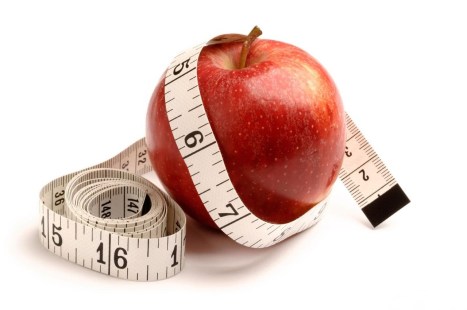
So, based on the unsettling conclusion of the article above, I did some investigating and found more disappointing headlines from that same week! Here are some that are entirely focused on weight loss and food: “12 Foods That Control Your Appetite” and “10 Types of Hunger and How to Control Them”. These articles tell you the “scientifically proven” ways to “reach your weight loss goals” and “say goodbye to unneeded calories”. Why not just put up a sign that says “you only matter if you are thin so you should probably start starving yourself now?” I won’t get into triggers and eating disorders too deeply right now but, for some women, this is where disordered eating habits and body image challenges begin. We’re inundated with new ways to fear food and reasons why we shouldn’t quench our hunger or respond to our body’s natural indication that it needs something – like food! So, we’re being encouraged to listen to our body but, what that really means, what the subtext is saying, is decide if you’re really hungry so you don’t eat for no reason and waste calories. Because calories are evil, food is evil and even your go-to foods should be changed so you can shed more pounds. In fact, we fear “fat” so violently that it’s encroaching on every aspect of our livelihoods.Red apple and tape measure. Image shot 02/2008. Exact date unknown.

Here’s another example: “10 Signs Your House Is Making You Fat”.  Now in your pursuit for “health” you can be averse to your own home too! Probably a deserted island with limited resources is the only safe place. Really, did you know that having stocked cabinets is putting you at risk for being “fat”? This statement is so problematic I don’t even know where to start! Oh also, “family style serving” is another no-no. First and foremost, I just want to scream “check your privilege!” What I’m reading here is a complete inattention to what this article is actually saying which is “your privilege, access, and food security is making you fat” and that’s horrible. Am I supposed to be sorry for your privilege or just ignore it like your editors did when I read this article?

These perspectives, these pseuo-bibles to living “correctly”, are dispelling a version of womanhood that requires us to expect that healthy living can only be achieved if it initially comes from a place of immense, intense dissatisfaction with our bodies and ourselves. These publications encourage constant criticism, crafting a narrative that misconstrues womanhood, and more specifically what/who is a “healthy woman”, to be a compilation of never ending changes and improvements based on overwhelming proportions of articles that tell you how severely you’re doing everything wrong and that you’re doomed to be “fat”. THE HORROR! Kidding. But really, where’s the “you’re doing it right” or “you’ve done enough” article? That’s an article I’d like to read.

Sincerely,

Someone who’s trying to do enough (Me)