
If you’ve been reading along, you know I am an athlete and I have chronic pain. You know that running is both my motivation and occasionally my demise. You probably also know I recently experienced my first running related injury and because of that, I’ve been forced to take my first running hiatus in over a year. This is so hard and painful for me!
Anyway, with the goal of returning to running and combating an RSD flare, I saw a physical therapist about my knee injury. The entire day I was apprehensive; my experiences with physical therapists until now have not been the most positive. When I arrived, I explained my injury and then, hesitating a bit, I explained about my RSD. I shared that, truthfully, for more than a decade I haven’t known and can’t imagine a situation where something hurts and then stops hurting – especially in my legs. I shared that I have a really hard time telling if something hurts or if I am hurt. I mentioned that I have an even harder time determining if something is “bad enough” for me to stop being active (a trusted antidote to functioning while living with pain). I discussed that it’s hard for me to distinguish between “good pain” and “bad pain”. In fact, I noted, I have been conditioned to push through the pain. I said that I’m known to second guess myself and to question if my pain is even real. I said that I usually think I’m making it up or that it isn’t that bad.
My body language must have shown that I was scared too. I am scared! Actually, my fear is somewhat debilitating. I’m scared it won’t stop hurting ever. I’m scared I won’t be able to run or move the same way again. I’m scared it will escalate into something chronic. I’m scared this injury will negate all the work I’ve done and how far I’ve come. I fear relapse in the face of what seems right now to only be a minor setback.
I have so many questions! When will this associated pain flare end? Will this become my next permanent pain spot? Will I regain full functionality? How will I be able to tell when it is done hurting from the injury and back to normal pain? Is it a bad thing that I can’t distinguish the two pains anymore? I have good reason to be scared and worried about these things – they’ve happened before!
To my surprise, the physical therapist I saw was well informed about my condition and listened carefully as I explained what I was experiencing. After our conversation, he said two important things. First, he said, “I believe you. This is real” and then he said, “It will stop hurting”. I didn’t expect to hear either of those statements from him. Especially because “a huge burden for patients with chronic pain and fatigue is not being believed.” That was the first time I felt validated by a medical professional regarding my RSD as an adult. I didn’t have to explain myself or justify my pain. Hearing that simple phrase “I believe you” was so important. For me, that phrase allowed me to reciprocate (in my head of course) with, “I trust you”.
It was a hopeful, positive moment in a span of two incredibly lonely weeks. Since my injury, I’ve been completely unable to do many of my normal activities. I am stuck in my head and in the pain. I’m recognizing and rationalizing my pain constantly. I want to scream all day long. I feel like this is all my fault. I always feel like I’m making it up or making it worse than it really is. In that way, I feel like I can’t trust myself or my perception of my injury. It’s exhausting to second guess myself and negate my own feelings while coping with a legitimate, real injury.
I’m also sulking about not being able to run. My Pinterest searches for running quotes have skyrocketed! I miss it! I cannot explain the desire, need, to move and be active. I’m scared that I will lose my ability to run if I don’t maintain it! I truly am worried if I won’t be able to start again now that I’ve stopped. I’m also scared to be active because I am anticipating the pain. In the past, I’ve known it will hurt and learned how to be successful in my daily life and activities, but this new pain feels different. I am angry and I miss feeling like me and feel like nobody wants to hear about it, everyone wants to tell me it’ll be okay, and they wouldn’t understand even if I tried to explain.
Coincidentally, I recently had another differently reaffirming experience recently related to RSD. Two years ago, I was a mentor for a program for teens with chronic physical illnesses called TALC. The program teaches teens leadership and self-advocacy skills in relation to both their experiences living with chronic illness and the typical developmental trajectories of adolescents. My year as a mentor in this program was profoundly important for me. During that year, I was a graduate student and most of the time I felt like I was an impostor. I felt like I had little to offer in any contexts in which I was participating – except TALC. My involvement in TALC was important because I instantly had the feeling that I was in the right place. TALC has an inexplicable way of cultivating a feeling of belonging and like everyone is essential because of what they bring to the space.
I recently visited TALC and almost immediately upon my arrival the feeling of warmth and connection I loved about being a TALC mentor was reinvigorated. I even had the opportunity to meet a new mentor who shares my diagnosis. It’s really remarkable when I meet people with RSD! Overwhelmingly my experience in TALC could be described as a feeling of understanding and belonging. Sometimes, my connection felt like a tepid “we’re in this together” rather than a fervent “I get it”. However, when I met this mentor and shared about my diagnosis, she was beaming! I am the first person she’s met who shares her diagnosis. I can guarantee, there’s a different kind of reassurance and intimacy that emanates from empathy. It’s been a long time since I haven’t felt lonely and have felt seen with my diagnosis. Feeling totally vulnerable but not scared or exposed was an unexpected, welcomed feeling for me!
I used to think that being believed was enough. I used to hope for more moments where I didn’t have to explain myself or field questioning looks when I shared about my condition. I used to not share my actual diagnosis because I was sure it wasn’t serious enough or believable enough. I know there are people whose struggle is more difficult than mine and whose diagnosis is easier to understand (read: believe) or more serious than mine. Because of this, I didn’t always see the value of disclosing my condition. When I did, I did so because I had to share this information with a medical provider or because I felt very safe and like I could trust the person. Even in TALC, although I could relate well to the teens’ experience I didn’t often share my diagnosis because it felt trivial and insignificant.
Yet, from these two experiences, I learned that folks with RSD need both “I believe you” and “I get it”. I know now that being believed is absolutely important, but being understood is even more vital! That type of genuine understanding is something I typically only get from my RSD Sisters. I have been so focused on being believed and explaining myself to the world that until I saw what understanding looked like reflected back at me, I forgot it’s critical value. We need to be supported by our friends, families, and medical providers, and we also need to be connected to each other in ways that elevate our successes and potential to thrive despite our pain. We need people who both understand and believe us without lengthy explanations, and know that our individual experiences are personal and unique.
Is your experience limited to “I believe you” and lacking “I get it”? If so, let’s connect because we need both!




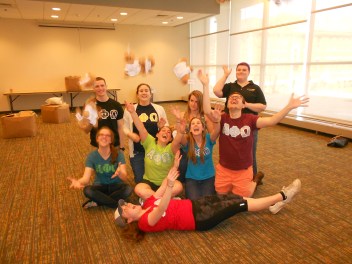 us should go something like “It was the best of times, it was the worst of times…” or “nobody said it was easy…” but actually, in all seriousness, it was truly an honor to be awarded a Chapter DSK today. I am so thankful for the wonderful experiences I’ve had as an active Brother and I cannot wait to continue to serve with APO as alumni!” Just a few weeks later I was offered a position on Region 1 Staff! This fraternity has given me more than I could ever ask for. APO continually shows me the the meaning of brotherhood in ways I can’t explain. I made some of the best friends and learned some of the most important lessons and skills of my life.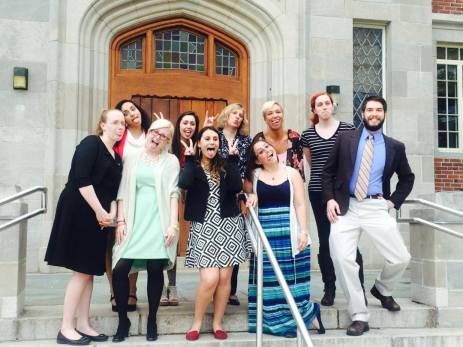
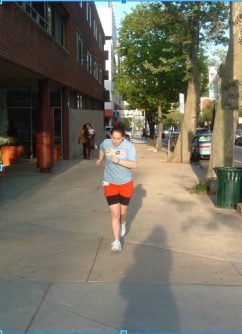 reach your goals and never stopping until you achieve what you want. Apparently my 18 year old self was more attuned to grasping at opportunity than I realized and, I may never learn to stop!
 n Education Policy Program: While this hasn’t been the BEST thing in 2015, one thing is certain, (in a paradoxical way) I know that if I never came here and if I stayed at UConn I wouldn’t ever know that I truly didn’t like it. I mean, beyond speculation. Also, and I guess obviously, the things I don’t like aren’t the things I was most nervous about so I suppose there’s value in that too. Regardless, I’ve had some amazing opportunities here to continue to grow as a researcher and an academic (whatever that means). I also learned the value of networking and connections beyond the colloquial saying “it’s not what you know, it’s who you know”. I’m working hard and making it work day by day.
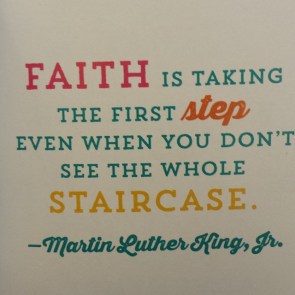 d efficiency at all times) I did some amazing things! And, perhaps more importantly, I learned that I am more than the list of accomplishments that fill up my resume or the things I do each day to feel productive or worthy. With the encouragement of some amazing mentors and lots of hours spent thinking (reflecting), I found myself when I intentionally took the time to critically consider my experiences. I started attributing credit to myself for my accomplishments rather than luck. Told myself “I earned this. I did this. I am good enough” and slowly I started to believe it. Judith Bulter wrote, “life histories are histories of becoming” and that notion has been a driving force compelling me to consider what I’ve experienced and why it’s been influential in my life rather than just considering how it’s going to propel me on toward the next “best” thing. I am done quantifying my success by how others view my accomplishments. This year rather than reaching the top step and turning around to find 15 more steps to climb I’m standing proud on the top, looking down with satisfaction, attributing value to what I’ve accomplished, and just letting it all soak in.
 can you do ALL those things?”
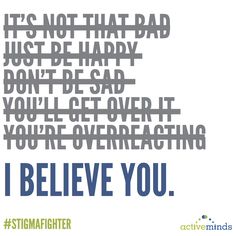 is a huge and REAL aspect of my life. Instead I’d rather hear “I believe you”. Living with an invisible illness means that if you choose to tell people about your condition you constantly have to convince people that you’re struggling. Why is that? Why do I need to prove myself to anyone else? Similar to mental illness, chronic, invisible, physical illnesses are challenging to confront each day. And when you identify with so many other things (yay intersectionality!) in addition to your chronic illness those who judge have a hard time fitting the pieces of your life together. Apparently, if it doesn’t make sense by their logic, it must not be real.
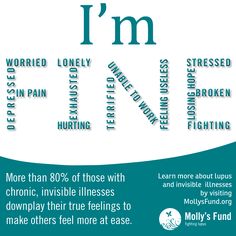 so many people living with chronic illness, we put up a front. Each day we go out into the world attempting to convince others (and ourselves) that we’re “fine” or “normal”. We have to, because we cannot allow our condition to control our lives or confine us. We can achieve and be excellent despite of or in the face of our chronic condition. Each day, we face a demon that wants us to stay down. It’s a demon we have to overcome. But what’s challenging is that even when we give off the appearance of being “fine” we’re struggling. And then, if we’re successful, people assume we are fine. What complicates this is that once they assume you’re fine they have a difficult time hearing that you’re not. And when they do, their disposition toward you turns to pity or astonishment. The truth is, if I were to be honest about how much pain I feel each day it would likely make others uncomfortable. When I do tell people, they’re impressed by me. Don’t be impressed by me. Please. This is just who I am. We all have things that challenge us and shape our identities. This is one of mine. Instead, please accept my story and take this as an opportunity to learn more about the multiple dimensions of me. I live in pain each day and I’m incredibly good at putting up a front. Sometimes this gets me in trouble because I’ve gotten pretty good at ignoring my physical (and sometimes mental) obstacles in order to live a “normal” life and do everything I expect for myself. Sometimes that makes me work harder and push myself more. I can’t allow my pain to rule me. I have to literally triumph over pain and then some each day. The extra bit is to prove to whomever that I am more than my diagnosis and that my accomplishments are above and beyond simply “in spite of my condition”.
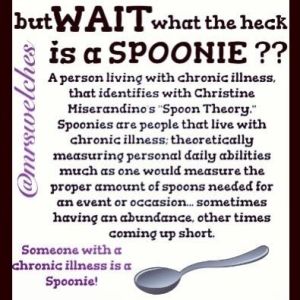 so we attribute praise. I’m just me. I’m one ordinary person with this specific challenge and I’m here to say it’s a constant part of my life but it’s not the only part of my life. I’m a Spoonie. In some ways, I need to be constantly aware of my daily obligations so I don’t burn out. Burn out is real. Running out of spoons is why I often “quit” at 9:30 PM these days. But that’s my reality. And, all you get to do is accept that and support me. You don’t get to judge and decide for yourself based on my actions how severely I’m suffering or how real my pain is. You don’t get to decide for me if I’m making this up. You get to listen and validate. And gosh! Validation feels so good! Validation sounds like “I believe you”. It sounds like “what do you need from me”. It presents like genuine understanding.
 I'm Probably Overthinking This